
What happened
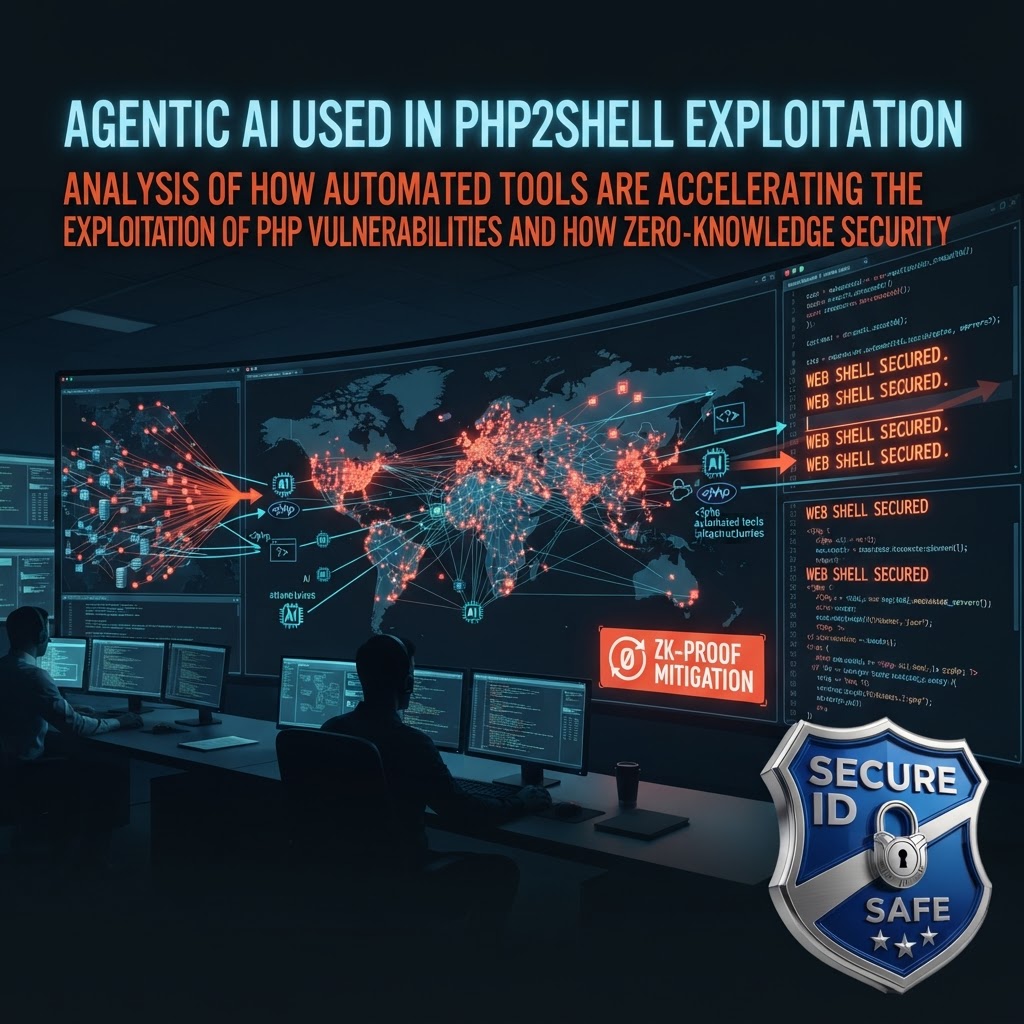
Threat actors are actively exploiting critical PHP vulnerabilities (CVE-2026-109618 and CVE-2026-109619) to compromise web infrastructure. Reports from security researchers and honeypot monitoring indicate that attackers are successfully obtaining working shells on exposed systems. These vulnerabilities allow for unauthenticated remote code execution, and the availability of proof-of-concept code has significantly increased the speed of exploitation attempts in the wild.
Why this matters
The automation of the exploit lifecycle significantly compresses the time between initial entry and full system compromise. By utilizing automated scripts and agentic tools to identify and exploit vulnerable PHP-FPM or Apache configurations, attackers can bypass traditional manual response times, turning what was once a complex operation into a near-instantaneous compromise of web servers.
How zero-knowledge changes this
In a standard environment, the compromise of a web server often leads to the theft of sensitive configuration files, database credentials, and user session tokens. SecureIDsafe neutralizes this threat through a zero-knowledge architecture. Because we utilize AES-256 client-side encryption with device-derived keys that the provider never holds, even if an attacker gains administrative access to the server, they are left with only useless ciphertext. The attacker cannot decrypt the data because the decryption keys never leave the user's device. Furthermore, our non-bypassable 24-word BIP-39 seed recovery ensures that even if an attacker attempts to manipulate the account, they cannot access the underlying data without the user's unique, locally-held recovery phrase. By ensuring that the service provider is never a point of failure, SecureIDsafe ensures that a breach of the infrastructure does not equate to a breach of the user's sensitive information.