
What happened
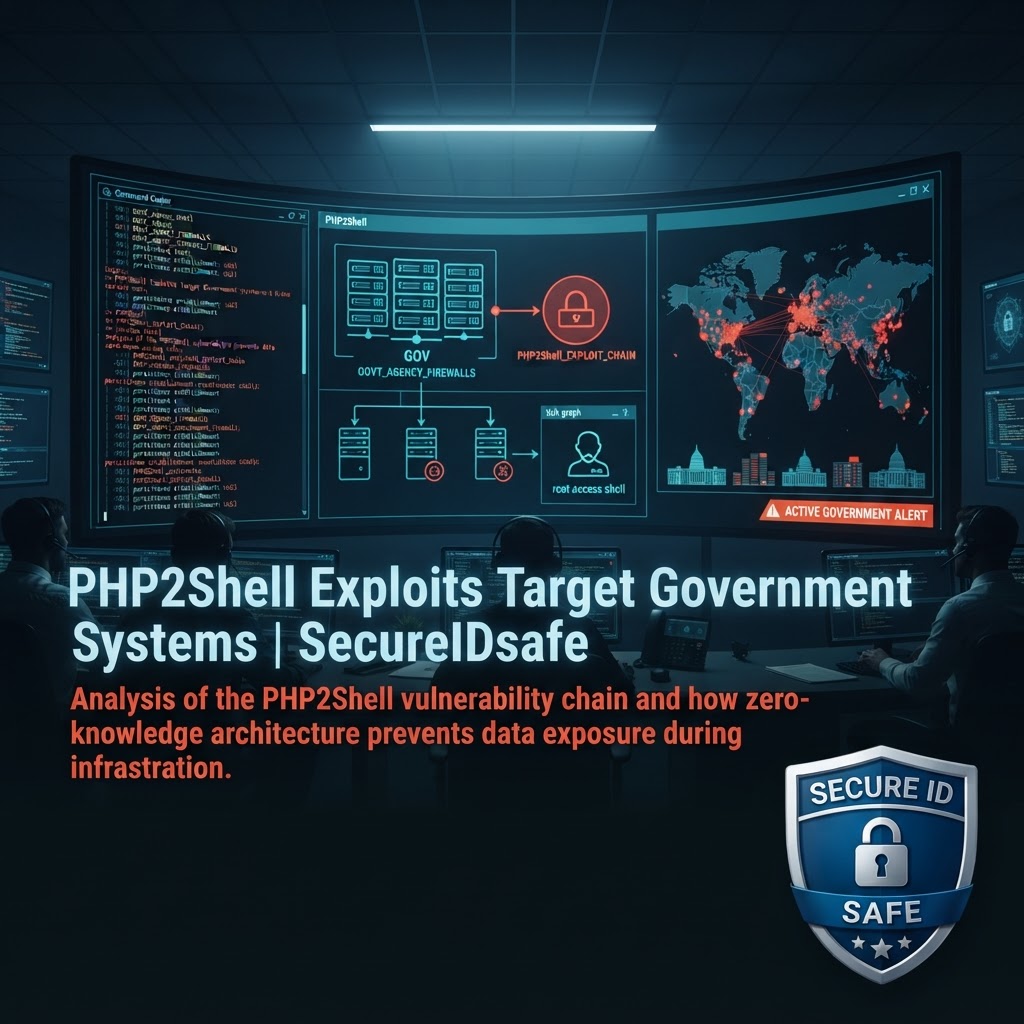
On October 21, 2026, critical vulnerabilities in the core PHP language runtime (CVE-2026-109618 and CVE-2026-109619), collectively known as PHP2Shell, were disclosed. These vulnerabilities allow for unauthenticated remote code execution. By October 26, CISA added these flaws to its Known Exploited Vulnerabilities (KEV) catalog, confirming active exploitation in the wild by threat actors to gain unauthorized access to systems.
Why this matters
The ability to bypass management interface security and gain remote code execution on critical infrastructure represents a high-impact threat to national security. Because these vulnerabilities affect all PHP installations serving web requests, they provide attackers with a direct path to exfiltrate sensitive data and maintain long-term persistence within protected networks.
How zero-knowledge changes this
In a standard environment, a compromised server often grants attackers access to plaintext configuration files, credentials, and sensitive data stored in memory or on disk. SecureIDsafe neutralizes this risk through a zero-knowledge architecture. By utilizing AES-256 client-side encryption, all data is encrypted before it ever leaves the user's device. Because the encryption keys are device-derived and never held by the provider, even if an attacker successfully roots a server or gains administrative access to the infrastructure, they would only encounter useless ciphertext. Furthermore, our non-bypassable 24-word BIP-39 seed recovery ensures that even in the event of a total system compromise, the user's identity and data remain under their exclusive control, preventing the attacker from escalating privileges or accessing the underlying data vault.