
What happened
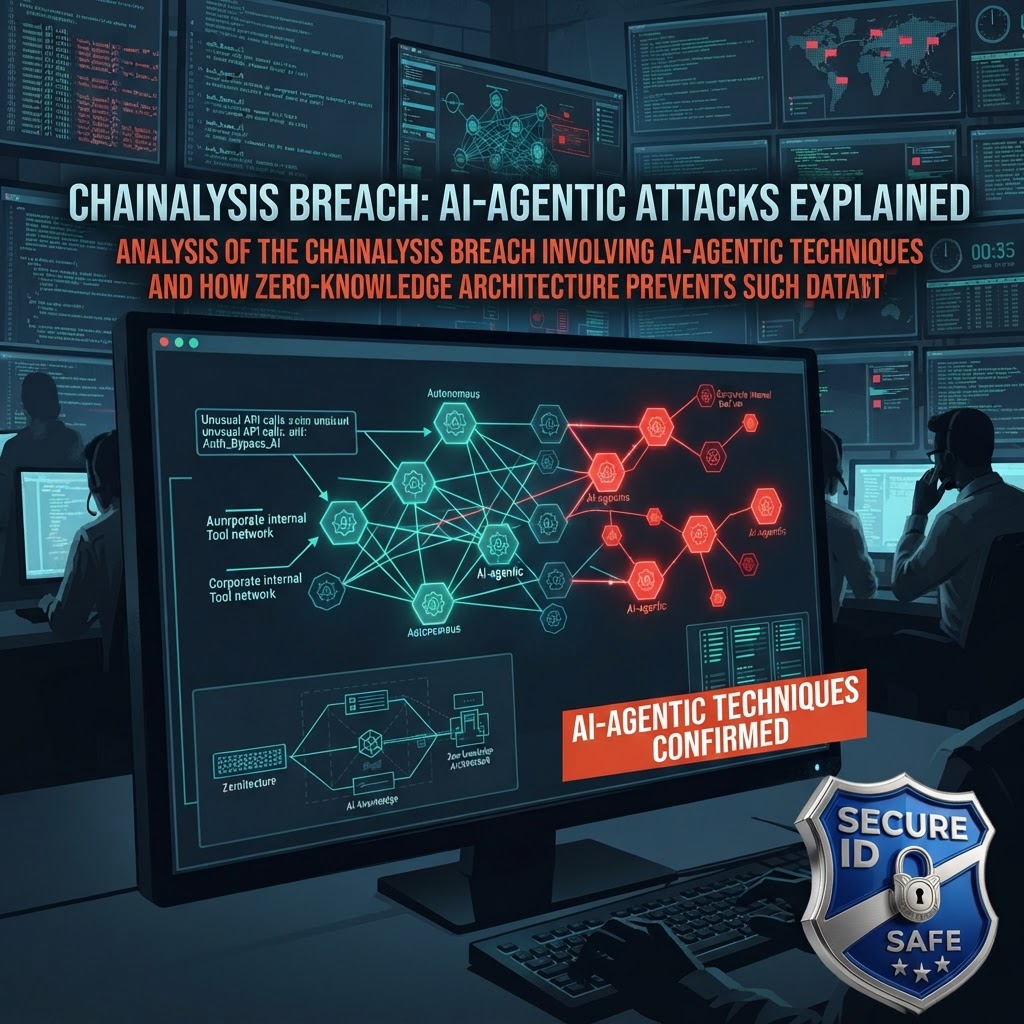
Blockchain analytics firm Chainalysis recently disclosed a security incident involving unauthorized access to its internal tools and systems. The company confirmed that an external actor employed "offensive agentic techniques" to navigate its infrastructure, resulting in the exposure of customer credentials, email addresses, and live session tokens.
Why this matters
This incident represents a significant evolution in the threat landscape. Unlike traditional manual intrusions, AI-agentic attacks allow threat actors to automate the discovery of vulnerabilities, perform rapid data triage, and navigate complex internal networks with minimal human intervention. This increases the speed and scale at which sensitive data can be exfiltrated, turning internal tools into liabilities if they are not properly isolated.
How zero-knowledge changes this
Zero-knowledge architecture is designed to neutralize the impact of such breaches through a client-side encryption model. In a scenario where an attacker gains access to internal tools or databases, they would only encounter ciphertext. Because the data is encrypted with keys that the provider never holds, the information remains unintelligible to the attacker. Even if an AI agent successfully navigates the network to reach the storage layer, it cannot decrypt the information without the user's unique, device-bound key. This ensures that even in the event of a total system compromise, the user retains sole custody of their data, preventing the unauthorized access or manipulation of sensitive identity records that occurred in the Chainalysis incident.