
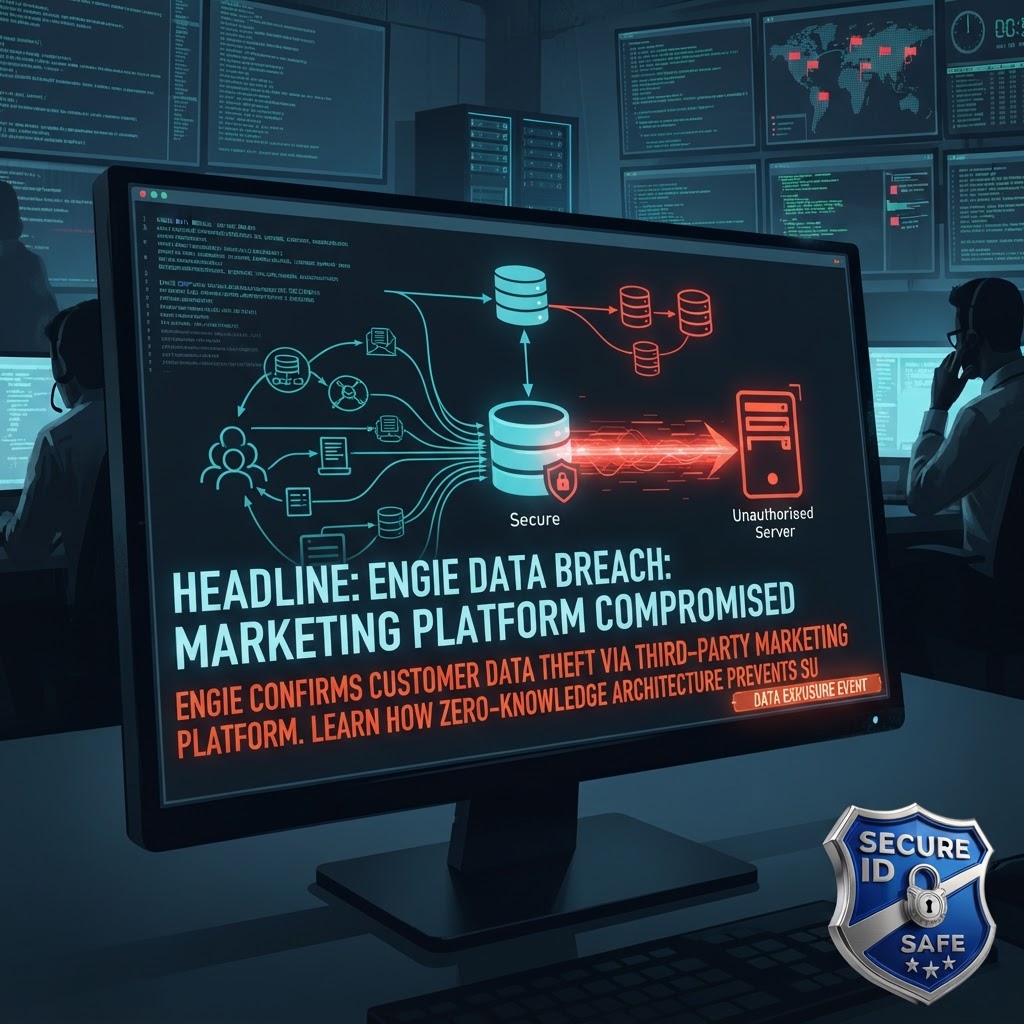
What happened
French energy giant ENGIE recently confirmed that unauthorized actors successfully breached a marketing platform utilized by its business partners. The incident resulted in the exfiltration of sensitive customer data, marking a significant security failure within the company's third-party ecosystem.
Why this matters
This incident demonstrates the persistent vulnerability of centralized data repositories. When companies or their partners store customer information in plaintext or accessible databases, a single compromise of a peripheral system—like a marketing platform—can lead to the mass exposure of personal records. This creates a cascading risk where the security of the end-user is entirely dependent on the weakest link in the vendor's supply chain.
How zero-knowledge changes this
SecureIDsafe’s architecture is designed to neutralize the impact of such breaches. By utilizing AES-256 client-side encryption, data is encrypted before it ever leaves the user's device. Because SecureIDsafe never holds the encryption keys—which are derived locally from the user's device—the service provider stores only ciphertext. Even if an attacker were to breach a platform using SecureIDsafe, they would only gain access to indecipherable, encrypted blobs rather than usable customer data. Furthermore, our non-bypassable 24-word BIP-39 seed recovery ensures that even in the event of a total system compromise, the user remains the sole custodian of their information, rendering the stolen data useless to the adversary.