
What happened
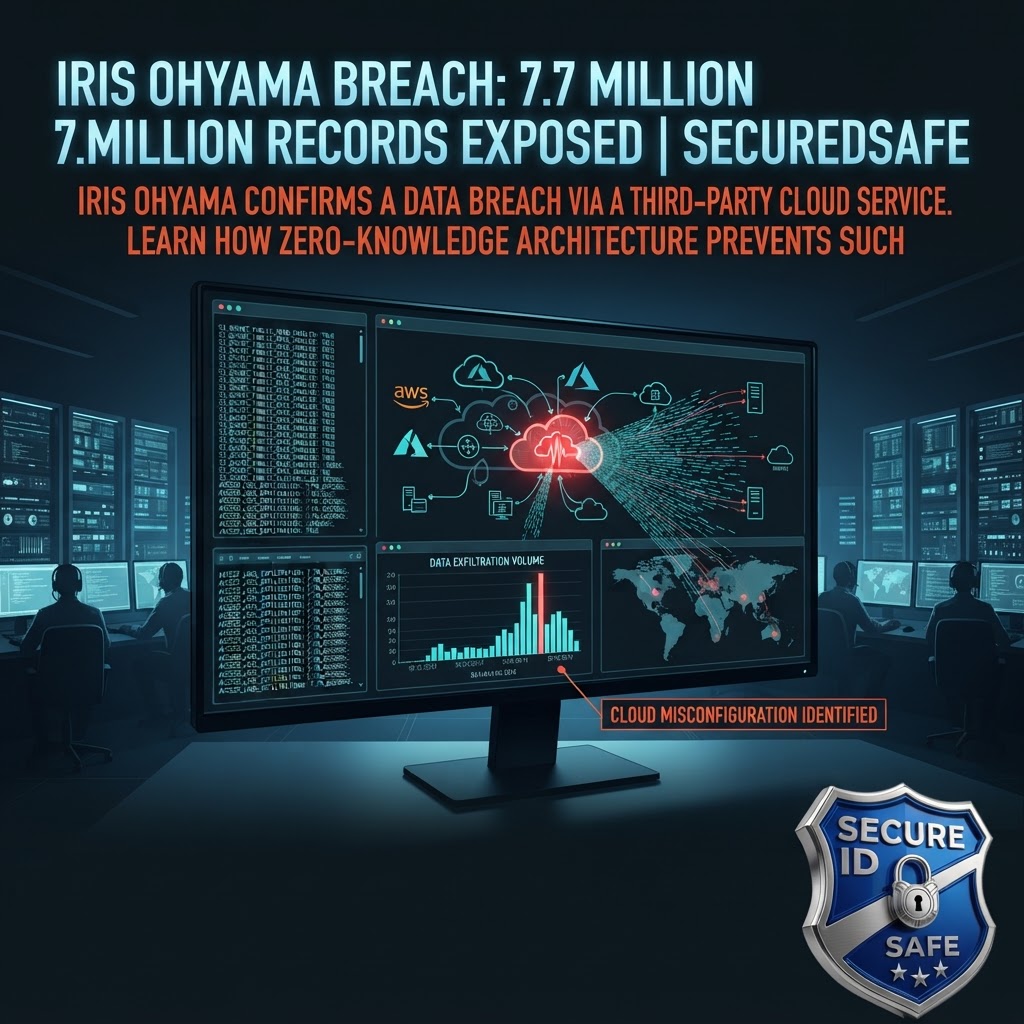
Japanese manufacturer Iris Ohyama disclosed that personal information belonging to approximately 7.7 million individuals may have been exposed following unauthorized access to a third-party cloud service. The company discovered the incident in late October, suspended its "Iris Plaza" online store, and notified Japanese authorities on October 29, 2026.
Why this matters
This incident highlights the risks associated with third-party cloud dependencies. When organizations store customer information in centralized cloud environments, a single point of failure can lead to the mass exposure of sensitive personal identifiers. While credit card data was not stored in the affected service, the leaked information provides attackers with significant leverage for phishing and identity theft campaigns.
How zero-knowledge changes this
SecureIDsafe’s zero-knowledge architecture is designed to neutralize the impact of such breaches. By utilizing client-side encryption, all data is encrypted on the user's device before it reaches the cloud. Because the provider never holds the encryption keys—which are derived locally from the user's device—the data stored in the cloud remains ciphertext-only. Even if an attacker gains unauthorized access to the cloud storage, they would only encounter indecipherable, encrypted blobs. Furthermore, our non-bypassable recovery mechanisms ensure that only the legitimate user can regain access to their data, rendering stolen credentials or cloud-side access useless to unauthorized parties.