
What happened
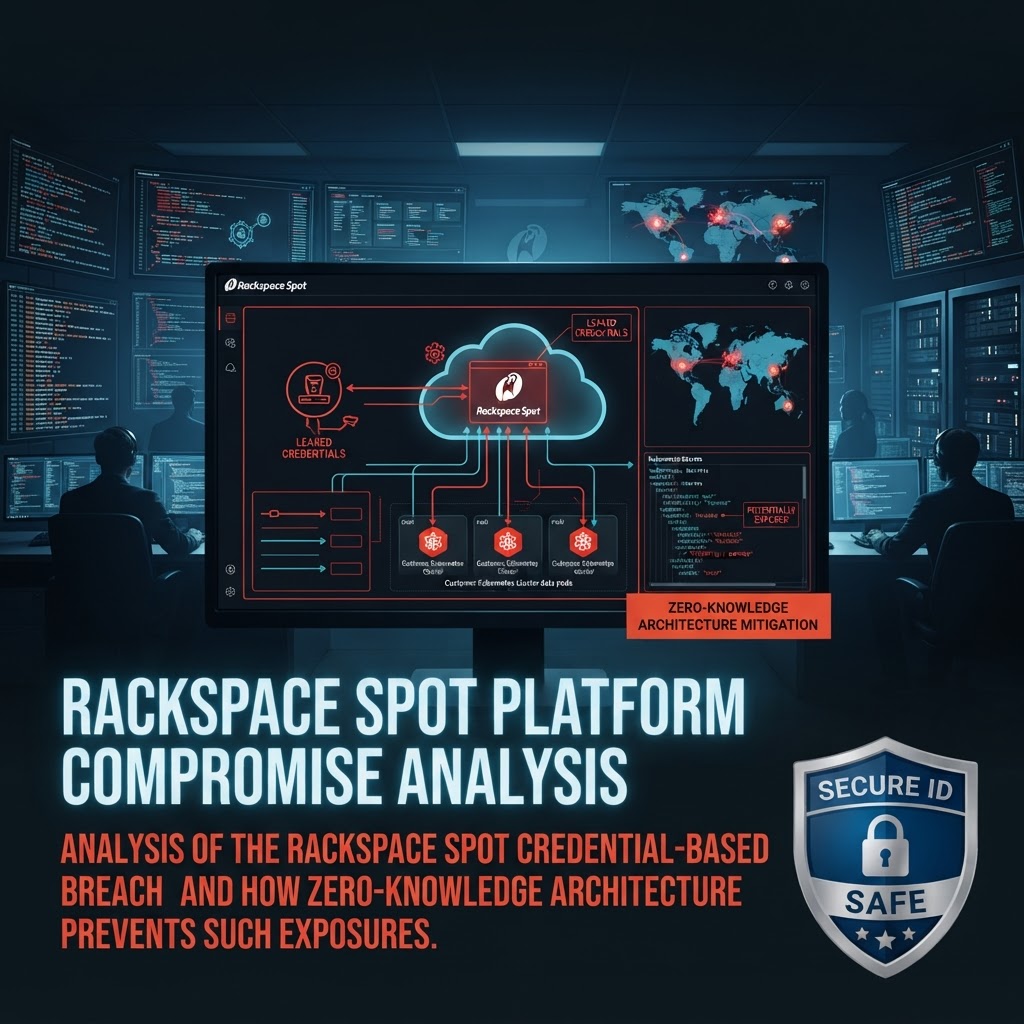
On November 17, 2026, unauthorized actors utilized leaked credentials to gain access to the Rackspace Spot cloud platform. The attackers were able to act as legitimate users, deploying unauthorized workloads and gaining the ability to read Kubernetes Secrets, API tokens, and refresh tokens within customer clusters.
Why this matters
This incident demonstrates the fragility of cloud-based identity management. When a service provider's internal systems are breached, the trust boundary between the provider and the customer is shattered. If customer secrets are stored in a way that is accessible via the provider's management plane, the provider's security failure becomes the customer's data breach.
How zero-knowledge changes this
Zero-knowledge architecture would neutralize this threat through client-side encryption. By utilizing encryption with device-derived keys that the provider never holds, sensitive data—such as Kubernetes Secrets or API tokens—would remain ciphertext-only within the storage environment. Even if an attacker gained full administrative access to the platform's infrastructure, they would only encounter encrypted blobs. Without the device-derived keys, which are never transmitted to or stored by the provider, the attacker would be unable to decrypt the stolen data. This ensures that the user retains sole custody of their decryption keys, preventing unauthorized access to their digital assets even in the event of a total system compromise.